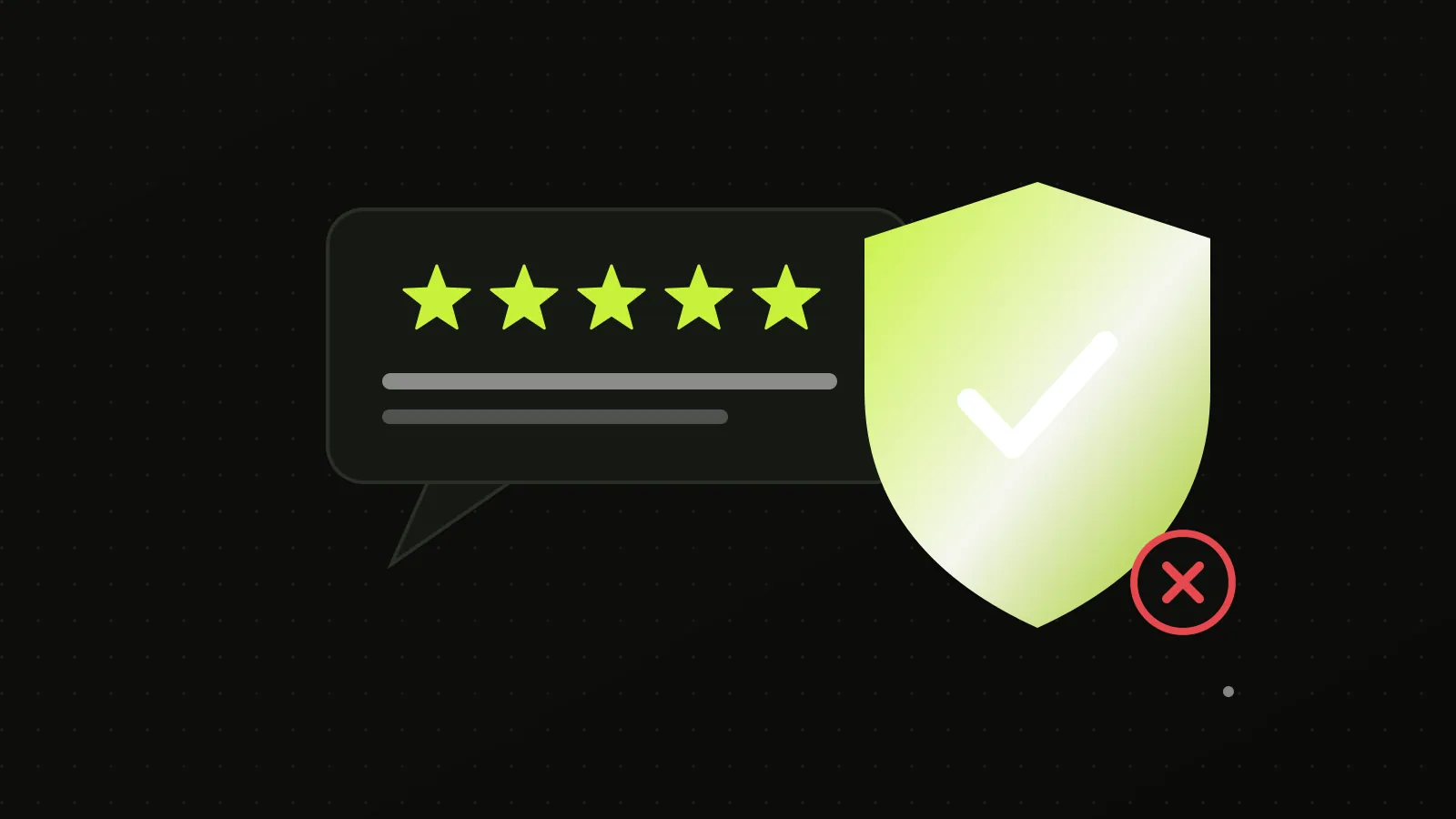
To get Google reviews without breaking the rules, use one routine: ask every customer after a finished job, give them a direct link or QR code, and never offer anything in return. Google's contributed content policy bans incentives, selective asking and pressure, and regulators in the US, UK, Canada, Australia and New Zealand treat fake or manipulated reviews as consumer law breaches. This guide sets out what you can do, what you cannot, and the wording to use.
How do you get Google reviews without breaking the rules?
The Google reviews rules allow you to ask every customer, to send a direct link or QR code, and to reply to reviews. They ban incentives, asking only happy customers and any pressure. The sections below give the wording and the source for each rule. Review requests can run automatically after each job: see our review and reputation automation and the fixed-price AI automation packages.
How do you ask customers for a Google review?
Ask each customer once, soon after the job, with a direct link or QR code. Google's help page says you can ask customers to visit a Google link or scan a QR code, and that customers need a Google Account to leave a review, which they can set up with a non-Gmail email address. Send the link by text or email the same day, and print the QR code on invoices and in the van.
Data behind this figure
| Do | Never |
|---|---|
| Finish the job, then ask | Offer a reward or discount |
| Send the same message to every customer | Ask only happy customers |
| Share a Google link or QR code | Set staff review quotas |
| Accept honest reviews at any rating | Have staff review you |
| Reply specifically and briefly | Use groundless legal threats, or fake and AI reviews |
Can you ask customers to leave a Google review?
Yes, you can ask customers to leave a Google review. Google's help page says you can ask customers to visit a Google link or scan a QR code, and what you cannot do is offer something for it, ask only the happy ones or pressure anyone, as the sections below set out. Ask every customer, once, politely.
How do you get a Google review link or QR code?
You get a Google review link or QR code from your Business Profile, where Google gives you a link you can share and turn into a QR code. The page we reviewed says you can share a link or QR code, but points to a separate help article for how to get one, so follow Google's current steps because the menus change. Put the code on invoices, receipts and the van, next to the words "Review us on Google".
Do Google review QR codes expire?
We found no Google documentation that says a review QR code or link expires. A code is just a link to your profile's review form, so it keeps working while the profile does. Test it from a phone once a quarter, and again after any change of address, name or profile, because a changed profile can break a printed code.
What should a review request message say?
A good review request is short, polite, names the job and gives the link, with no incentive and no pressure. For example: "Thanks for choosing us for your hot water repair today. If you were happy with the work, a short Google review helps other local customers find us. Here's the link." This wording is ours. It does not ask for a particular rating, which matters for the rules below.
Google review request email template
A review request email needs a plain subject line, the job named in the first sentence, one link and no incentive. Subject: "How did we do on your [job] today?" Body: "Hi [name], thanks for choosing us for your [job]. If you were happy with the work, a short Google review helps other local customers find us: [link]. If anything wasn't right, reply to this email and we'll fix it." This is our template, and it sends the unhappy customer to you without gating who gets the link, because everyone receives the same message.
Google review request text message for plumbers, salons and dentists
A review request text should be one or two sentences with the job and the link. Plumber: "Thanks for having us out today. If you were happy with the repair, a quick Google review would help: [link]". Salon: "Great to see you today, [name]. If you loved your cut, a Google review helps others find us: [link]". Dentist: "Thanks for visiting [practice] today. If you were happy with your visit, you can leave a Google review here: [link]. For any health concerns, please call us." Keep clinical detail out of reviews and replies.
When is the best time to ask for a Google review?
The best time is when the job is finished and the customer has seen the result, usually the same day. We have no sourced data on timing, so this is our view. Asking before the work is done risks pressure, and Google says merchants should not require or pressure customers to leave reviews while on the premises.
Can you offer a discount or gift for a Google review?
No. Google's policy lists as prohibited that merchants offer incentives such as payment, discounts, free goods or services in exchange for reviews. It also bans reviews posted due to an incentive offered by a business. This includes content posted following a request to revise or remove a review in exchange for an incentive. A "$10 off your next job" offer for a review breaks the policy.
What is Google's policy on incentivizing reviews?
Google's policy on incentivizing reviews prohibits offering payment, discounts, free goods or services in exchange for reviews, and bans reviews posted because of an incentive from a business. It also covers asking someone to change or remove a review for an incentive. The policy applies whether the incentive is cash, a prize draw or a discount on the next job.
Is paying for reviews illegal in the US?
Yes, buying reviews that express a particular sentiment is banned by the US Federal Trade Commission's rule on fake reviews. The FTC's final rule, announced in August 2024, prohibits businesses from offering compensation or incentives conditioned on writing reviews that express a particular sentiment, and the condition can be stated outright or implied. The FTC said the rule lets it seek civil penalties against knowing violators.
Are fake Google reviews illegal?
Fake Google reviews are illegal or unlawful in the markets in the table further down, and the details differ by country. In the US, the FTC's August 2024 rule bans fake reviews, including AI-generated ones. In the UK the CMA has published guidance on fake reviews, in Canada the Competition Bureau says businesses that write or permit misleading reviews could be liable, and in Australia the ACCC says fake reviews breach the Australian Consumer Law. Whether a specific act is unlawful where you are is a question for a local lawyer.
Are fake Google reviews legal anywhere?
We are not aware of any of these five markets where posting fake reviews for your own business is lawful, and the regulators' pages we cite say the opposite. Do not look for a safe version: the safe version is a real review from a real customer.
Are AI-generated reviews illegal?
AI-generated fake reviews are covered by the FTC's rule in the US. The FTC says the rule applies to reviews from people who do not exist, including AI-generated fake reviews, and to reviews by people with no real experience of the business. Writing your own reviews with an AI tool, or paying someone else to, is exactly what the rule is aimed at.
What is review gating, and is it allowed?
Review gating means asking only happy customers for a review, and Google's policy says merchants may not discourage or prohibit negative reviews or selectively solicit positive reviews. A gating setup might send everyone a satisfaction survey, then route only the high scorers to the Google link. Do not do that. Send the same request to every customer.
Can you ask only happy customers for a review?
No. Google's policy says that merchants may not selectively solicit positive reviews from customers. Ask every customer. The reviews that result will include some negatives, and a spread of ratings with real replies tends to read as more credible than a wall of five stars, which is our view, not a finding.
Can employees leave Google reviews for their employer?
Employees should not post reviews of their own employer, and where they do, the connection must be disclosed under several regimes. Google's policy bans content based on a conflict of interest, which can include current or former employment. In Canada the Competition Bureau says employees must disclose all connections they have with a business, and that businesses that write or permit reviews giving a false or misleading impression could be liable under the Competition Act. The FTC's rule requires insider reviews to disclose the connection clearly. Do not ask staff to review you.
Can you ask staff to collect a certain number of reviews?
No. Google's policy says merchants may not request staff to solicit a certain number of reviews or reviews that include specific content, including content that identifies a staff member. Thank staff for good service, and do not run a review quota or a leaderboard.
Can you threaten legal action over a bad review?
You should not use groundless legal threats to get a review removed. The FTC's rule prohibits using unfounded or groundless legal threats, physical threats or intimidation to remove negative reviews. A legitimate legal claim, such as for defamation, is a matter for a lawyer, and is not the same as a threat made to make a review disappear.
What if a customer offers to remove a bad review for a refund?
Do not trade a refund or discount for the removal of a review. Google's policy bans content posted following requests for revision or removal of a review in exchange for an incentive, and lists "free goods and services" as an incentive. Fix the customer's problem on its own merits, and you may ask politely whether they would consider updating their review once it is resolved, without offering anything for it.
How do you respond to a negative Google review?
Reply promptly, acknowledge what went wrong, explain what you can do and keep it short. Google's guidance says to address the reviewer by name, sign off with your name, apologise when appropriate, never share the reviewer's private information, and never make personal attacks. Move any detailed resolution offline.
How do you respond to positive Google reviews?
Reply to positive reviews with something specific to the job, and avoid a generic thank-you sent to everyone. Google's guidance asks for clear and helpful replies, says not to use replies to offer deals, and suggests focusing on reviews where you can add a useful update or answer a question. A short, personal line beats a template.
How do you remove a fake or unfair Google review?
If you believe a review breaks Google's content policies, flag it for review. Google's help page says you can report a review that you think violates its policies. Google states that fake engagement is not allowed and will be removed, and that it may take action ranging from suspending account privileges to account termination. A review that is simply negative, but real, does not qualify.
Can you remove a Google review as the owner?
As the owner you can report a review for removal, and Google decides. The Google help page we reviewed describes reporting and a one-time appeal, and does not say owners can delete a review themselves. Only reviews that violate Google policy are eligible, and Google says not to report a review just because you disagree with it.
How do you report a Google review for removal?
To report a Google review for removal, open your Business Profile, choose to read reviews, select the report icon next to the review, pick a reason and send the report. Google also has a Reviews Management Tool where you can report a review and check progress. Pick the reason that matches the review's problem, for example spam or a conflict of interest, not just "inaccurate".
How long does Google review removal take?
Google says review evaluation typically takes several days. In the Reviews Management Tool the status shows as decision pending, report reviewed with no policy violation, or escalated, in which case you check your email. If a report is rejected, Google allows a one-time appeal covering up to 10 reviews. We have no data on how often reports succeed.
Are Google review removal services legit?
We found nothing in Google's help pages that offers or endorses a paid review removal service, and removal depends on the review breaking Google's policy. Be wary of anyone who guarantees a removal, because only Google decides. A service that offers to remove real negative reviews for a fee, or to flood your profile with positive ones, is in the territory the FTC and other regulators target.
Can fake negative Google reviews be removed?
A fake negative Google review can be removed if Google finds it breaks its policy, so report it and explain why: a review from someone who was never a customer, a competitor, or a review with a conflict of interest. Keep records that support the claim, such as proof that no job was ever booked under that name.
How many reviews do you need to rank in Google's local results?
Google gives no number, and says only that the count and quality of reviews are part of prominence. Its local ranking help page says prominence depends on how many websites link to you and how many reviews you have, and that positive reviews can help a business stand out. Distance and relevance matter too, so reviews alone do not guarantee a ranking. Our Google Business Profile checklist covers the rest.
What do the review rules say in the UK, Canada, Australia and New Zealand?
Each of these markets has a regulator that treats fake or misleading reviews as a consumer or competition law matter. The table gives the headline position from each regulator's own publication.
| Market | Regulator and source | What it says |
|---|---|---|
| United States | FTC final rule, August 2024 | Bans fake and AI-generated reviews, buying sentiment-conditioned reviews, undisclosed insider reviews and review suppression by groundless threats |
| United Kingdom | CMA, fake reviews guidance CMA208, 4 April 2025 | Guidance to help businesses meet their legal obligations after legislative changes introduced in April 2025 |
| Canada | Competition Bureau, January 2024 notice | Employees must disclose connections, and businesses that write or permit misleading reviews could be liable under the Competition Act |
| Australia | ACCC, December 2013 release | Fake online reviews breach the Australian Consumer Law, and omitting negative reviews can be as misleading as posting fake ones |
| New Zealand | Commerce Commission, via RNZ report, 17 December 2025 | The TV Shop was convicted on 13 Fair Trading Act charges, including undisclosed employee reviews and withheld low-rated reviews |
Note: Rules quoted from Google's published policy pages as read on 18 November 2026. This is general information, not legal advice.
Data behind this figure
| Date | Market | Position |
|---|---|---|
| Dec 2013 | Australia | ACCC: fake online reviews breach the Australian Consumer Law |
| Jan 2024 | Canada | Competition Bureau: businesses could be liable for undisclosed employee reviews |
| Aug 2024 | United States | FTC final rule bans fake and AI-generated reviews |
| 4 Apr 2025 | United Kingdom | CMA publishes fake reviews guidance (CMA208) |
| 17 Dec 2025 | New Zealand | The TV Shop convicted on 13 Fair Trading Act charges |
We have summarized headline positions only. Penalties and thresholds differ by country and change, so check the regulator's current page or a local lawyer before acting.
What can you do and what can you not do, at a glance?
| You can | You cannot |
|---|---|
| Ask every customer for an honest review | Offer payment, discounts or free goods for a review |
| Share a Google link or QR code | Ask only customers you expect to be positive |
| Reply to every review, helpfully | Set staff a quota or script the content |
| Thank staff for good service | Have employees review you without disclosure |
| Report reviews that break Google's policy | Threaten groundless legal action to remove a review |
What is a safe review process for a service business?
A safe process is the same for every customer: finish the job, send the same message with the link, never offer a reward, never filter by sentiment, reply to every review, and report only real violations. Write it into a one-page procedure so that staff do not improvise. If you would like help with review requests and replies, see our reputation service, which uses this process.
Quick answers to common questions
Can I ask customers for Google reviews legally?
Yes. Google says you can ask customers to visit a Google link or scan a QR code. You cannot offer incentives, ask only happy customers or pressure people to review.
Is it legal to offer discount for reviews?
No. Google's policy prohibits discounts, payment, free goods or services in exchange for reviews, and the FTC's 2024 rule bans compensation conditioned on reviews expressing a particular sentiment.
What happens if you buy fake Google reviews?
In the US the FTC says its rule lets it seek civil penalties against knowing violators, and Google says fake engagement is removed and may lead to suspended account privileges or termination.
How should I reply to a bad review?
Reply promptly, address the reviewer by name, acknowledge what went wrong, apologise where appropriate, keep it short and move the detail offline. Never share the reviewer's private information or attack them.
Can I delete a negative Google review myself?
Google's help page we reviewed describes reporting a review for removal and a one-time appeal, and does not say owners can delete reviews. Only reviews that break Google's policy are eligible, not ones you disagree with.
How many Google reviews do you need?
Google gives no number. It says the count and quality of reviews feed prominence, alongside distance and relevance, so reviews alone do not guarantee a ranking.
Can staff be rewarded for collecting Google reviews?
Google's policy says merchants may not ask staff to solicit a certain number of reviews, so do not set quotas or leaderboards. Thanking staff for good service is fine.
Google Business Profile checklist for local service businesses
A rule-by-rule Google Business Profile checklist for service businesses: ranking factors, name, address, categories, phone, hours and what gets you suspended.
The six places a small business loses customers
From first search to repeat booking, the six break points and the one number to watch at each.